

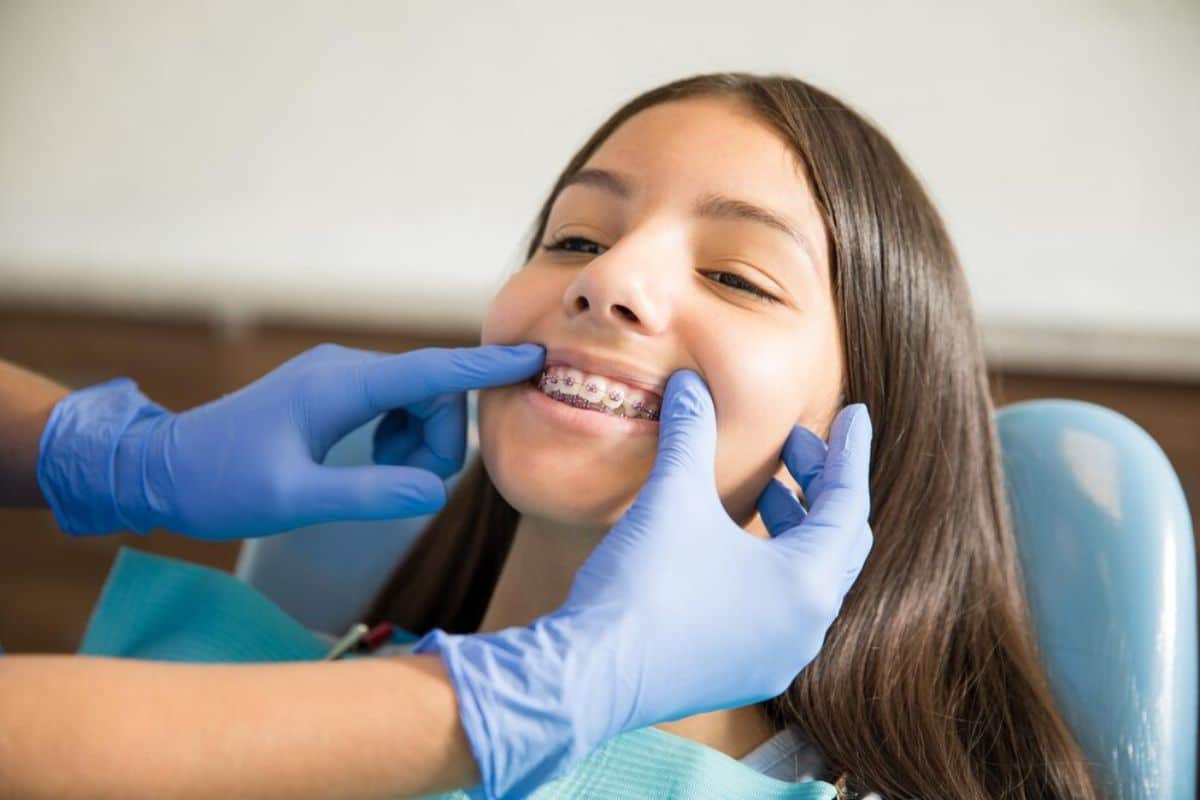
Hey there, smile seekers! Ever wondered what goes into crafting that picture-perfect grin you see in magazines? Well, a big part of it often involves a little help from our friends in orthodontics. You’re not alone if you’ve ever felt your teeth weren’t quite lined up the way you’d like. A whopping 75% of people in the United States have some form of malocclusion, which is just a fancy term for misaligned teeth or jaws (American Association of Orthodontists).
The good news? Many common orthodontic problems have effective solutions! Let’s dive into five frequent issues and explore how orthodontists work their magic to fix them.
Crowding: Not Enough Room to Grow
Imagine trying to fit ten books onto a shelf meant for eight – things get a little… crowded, right? The same can happen with your teeth. Crowding occurs when there isn’t enough space in your jaw to accommodate all your teeth properly. This can lead to teeth overlapping, twisting, or being pushed out of alignment.
- The Fix: Orthodontists often address crowding through several methods. One common approach is expansion, where devices like palatal expanders (for the upper jaw) or braces themselves can gradually widen the arch, creating more space. In some cases, tooth extraction might be necessary to relieve severe crowding and allow the remaining teeth to align correctly. According to one study, approximately 20% of orthodontic patients require at least one tooth extraction as part of their treatment (Journal of Orthodontics and Dentofacial Orthopedics). Braces or clear aligners are then used to guide the remaining teeth into their ideal positions.
Spacing: The Great Divide
On the flip side, sometimes there’s too much space between teeth. This can happen due to teeth being smaller than the jaw, missing teeth, or habits like thumb sucking. While small gaps might not cause functional issues, larger spaces can affect aesthetics and even lead to food impaction.
- The Fix: Closing those gaps is a common orthodontic goal. Braces are highly effective at bringing spaced teeth together, using controlled force to shift them gradually. Clear aligners can also achieve this, especially for minor spacing issues. In some instances, if a missing tooth caused the spacing, options like dental implants or bridges might be considered after orthodontic treatment to fill the gap permanently.
Overbite: When the Upper Bites Too Far
An overbite, also known as an “overjet” when referring to the horizontal overlap, is characterized by the upper front teeth significantly overlapping the lower front teeth. While a slight overbite is normal, a large one can lead to jaw pain, difficulty biting and chewing, and increased risk of injury to the front teeth. Studies suggest that a significant overjet is present in around 30% of children and adolescents (Angle Orthodontist).
- The Fix: Correcting an overbite often involves addressing the jaw relationship as well as the teeth. Braces with elastics (rubber bands) are frequently used to connect the upper and lower arches, guiding both the teeth and the jaw into a more harmonious alignment. In some more severe cases, particularly in adults, orthognathic surgery (jaw surgery) might be necessary to reposition the jaws.
Underbite: The Lower Jaw Leading the Way
An underbite is the opposite of an overbite, where the lower front teeth protrude in front of the upper front teeth. This can also cause difficulties with chewing and speaking, as well as jaw joint problems. While less common than an overbite, it still affects a notable portion of the population.
- The Fix: Similar to overbite correction, addressing an underbite often involves influencing jaw growth, especially in younger patients. Appliances like reverse-pull headgear can be used to encourage upper jaw growth. Braces and elastics play a crucial role in aligning the teeth. Again, in adult cases with significant skeletal discrepancies, orthognathic surgery might be the most effective solution.
Open Bite: No Vertical Overlap
An open bite occurs when the upper and lower front teeth don’t meet when the back teeth are closed. This can make biting into food difficult and may also affect speech. Habits like thumb sucking or tongue thrusting are often contributing factors.
- The Fix: Breaking habits is key in addressing open bites, especially in children. Orthodontic treatment typically involves using braces with specific archwires and elastics designed to intrude (move upwards) the back teeth and allow the front teeth to meet. In some cases, small temporary anchorage devices (TADs) might be used to provide extra support for tooth movement.
Your Journey to a Straighter Smile
Orthodontic treatment has come a long way, offering a variety of effective solutions for these and other alignment issues. If you’re concerned about your smile, consulting with a qualified dentist in Ludington is the first step. They can provide a personalized diagnosis and treatment plan to help you achieve a healthy, functional, and confident smile. So, what are you waiting for? Your journey to a straighter smile could be just around the corner!