

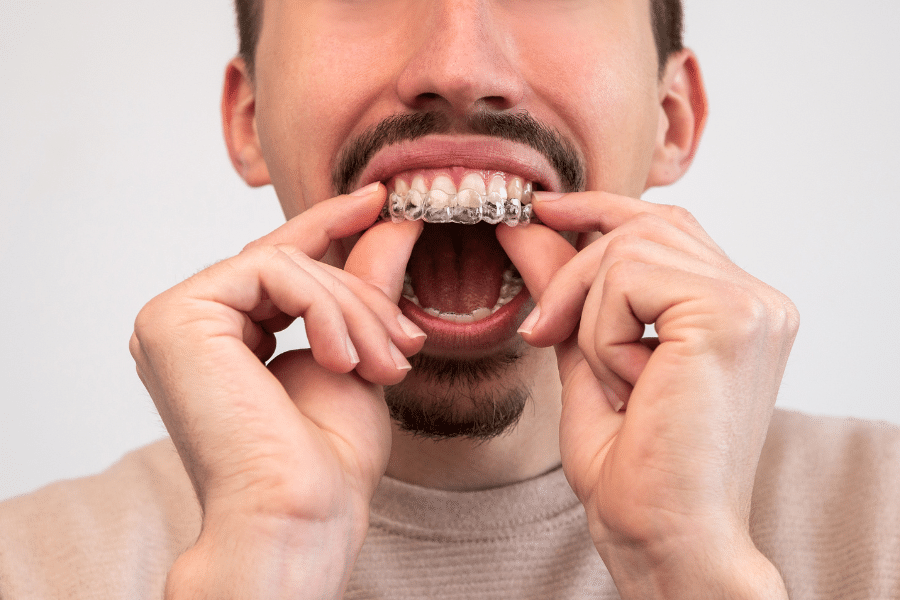
You’ve been wearing your Invisalign aligners just like your dentist told you to, but something doesn’t feel right. There’s a gap between your aligner and your teeth. You run your tongue along the edge and wonder if this is normal or if something’s gone wrong with your treatment.
Don’t panic. Aligner gaps happen, and most of the time, they’re fixable. Let’s talk about why these gaps show up and what you can do about them.
What Are Invisalign Aligner Gaps?
An aligner gap is exactly what it sounds like. It’s a space between your clear aligner and one or more of your teeth. Instead of fitting snugly against your teeth like a glove, the aligner lifts away, creating a visible gap.
Some gaps are tiny and barely noticeable. Others can be big enough to slide your fingernail under. Either way, when your aligner isn’t sitting flush against your teeth, it’s not doing its job properly.
Why Do Gaps Happen?
Understanding the cause helps you fix the problem faster. Here are the most common reasons aligners don’t fit right.
Not Wearing Your Aligners Enough
Invisalign works best when you wear your aligners 20 to 22 hours every day. If you’re taking them out for meals and forgetting to put them back in, or if you leave them out for long stretches, your teeth start drifting back to their old positions.
When you finally put the aligner back in, it might not fit anymore. Your teeth have moved, and now there’s a gap. This is one of the most common issues that a dentist Ludington sees in patients who are struggling with their clear aligner treatment.
Switching Trays Too Soon
Each set of aligners is meant to be worn for about one to two weeks. Some people get eager and switch to the next tray early, thinking it will speed up treatment. But your teeth need time to shift into position. Jump ahead too fast, and the new aligner won’t fit properly.
Attachments Fall Off
Those small tooth-colored bumps on your teeth aren’t just for show. They’re called attachments, and they help the aligners grip your teeth and guide them into place. If an attachment falls off, your aligner loses its anchor point. This can create gaps and slow down your progress.
Teeth Are Stubborn
Some teeth are harder to move than others. Maybe you have a tooth that’s rotated, or one that’s firmly rooted in place. These stubborn teeth resist the pressure from your aligners, which can lead to gaps forming.
Eating or Drinking With Aligners In
We’ve all been there. You’re running late and decide to sip your coffee or snack with your aligners still in. But food particles and sugary drinks can get trapped under your aligners. This doesn’t just risk cavities, it can also affect how well your aligners fit.
How to Fix Aligner Gaps
The good news is that most gap problems can be solved. Here’s what you can do.
Wear Your Aligners More
This is the simplest fix. If you’ve been slacking on wear time, get back on track. Set phone reminders if you need to. The more consistently you wear your aligners, the better they’ll fit.
Use Chewies
Chewies are small foam tubes that help seat your aligners properly. Bite down on them for a few minutes several times a day. This extra pressure helps close small gaps and makes sure your aligners are snug against your teeth.
Your dentist Ludington office typically provides these tools during your initial fitting, but you can also purchase them separately if you run out.
Go Back a Tray
If the gap is big and your current aligner just won’t fit, you might need to go back to your previous tray for a few more days. This gives your teeth a chance to catch up. Then try moving forward again.
Contact Your Dentist
Sometimes the problem needs professional attention. If you’ve tried the basic fixes and the gap won’t close, call your dentist. They can check if an attachment needs replacing or if your treatment plan needs adjusting.
A quick visit can save you weeks of frustration. Your dentist near me can examine your aligners, check your teeth movement, and get you back on track.
Preventing Future Gaps
Prevention is always easier than fixing a problem. Here are some tips to keep your aligners fitting right.
Stick to the schedule. Wear your aligners for the full recommended time each day. Only take them out for eating, drinking anything other than water, and brushing your teeth.
Follow the timeline. Don’t switch to new trays early unless your dentist says it’s okay. Each tray needs its full time to work.
Keep up with dental visits. Regular checkups help catch problems early. Your dentist Ludington can spot issues before they become bigger headaches.
Take care of your attachments. Be gentle when removing your aligners so you don’t knock off attachments. If one does fall off, call your dentist right away.
Clean everything properly. Keep your aligners and teeth clean. This helps your trays fit better and protects your oral health.
When to Worry
Small gaps that close when you use chewies aren’t usually a big deal. But some situations need immediate attention.
Contact your dentist if your aligner gap gets worse instead of better, if you feel pain or sharp discomfort, if an attachment breaks off, or if you can’t get your aligner to snap into place at all.
These signs mean something’s wrong with your treatment plan or the way your teeth are moving.
The Bottom Line
Aligner gaps are frustrating, but they’re usually not serious. Most of the time, better wear habits and some chewies will solve the problem. The key is catching gaps early and addressing them before they set your treatment back.
Your smile is worth the effort. Stay patient, follow your treatment plan, and don’t hesitate to ask questions.
Conclusion
Dealing with Invisalign aligner gaps doesn’t have to be stressful. Now you know what causes them and how to fix them. Remember that every smile journey has its bumps, and gaps are just one small challenge along the way.
If you’re experiencing persistent gaps or have concerns about your Invisalign treatment, don’t wait. Professional guidance makes all the difference. Schedule a consultation with a local dentist near me or an dentist ludington today to get personalized advice and keep your treatment moving forward. Your perfect smile is closer than you think.
Frequently Asked Questions
1. Is it normal to have small gaps with new aligners?
Yes, small gaps are common when you first put in a new tray. Use your chewies and wear your aligners as directed. Most gaps close within a day or two.
2. How long should I use chewies each day?
Use chewies for about five to ten minutes, three to four times per day. Focus on areas where you notice gaps.
3. Can I still move to the next tray if there’s a gap?
No. Your current tray should fit completely before moving forward. A gap means your teeth haven’t finished moving into position yet.
4. What if only one tooth has a gap?
This usually means that specific tooth is being stubborn. Extra chewie time on that spot often helps. If it doesn’t improve in a few days, contact your dentist.
5. Will aligner gaps ruin my treatment?
Not if you address them quickly. Ignoring gaps can slow your progress, but fixing them gets you back on track.
6. How tight should Invisalign feel?
New aligners should feel snug and create gentle pressure. They shouldn’t be painful, but you should definitely feel them working.
7. Can I fix gaps at home or do I need to see my dentist?
Try home solutions first like using chewies and improving wear time. If the gap doesn’t close in three to four days, see your dentist.
8. Should I wear a previous tray if my current one has gaps?
Sometimes going back one tray helps, but check with your dentist first. They can tell you if backtracking is the right move for your situation.